Why Is It Called the Edinburgh Tattoo?
(And Our Own Small Part in the Show)
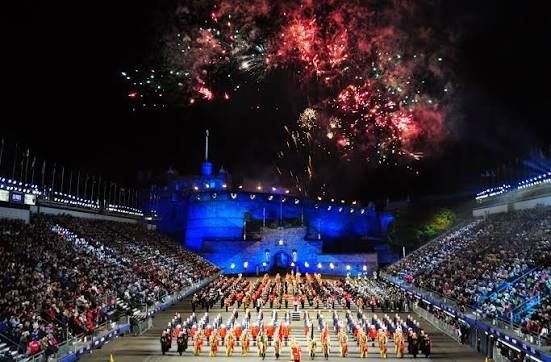
Every August, the Castle Esplanade fills with massed pipe bands, drummers, and dancers, and the skyline above Edinburgh Castle glows with lights and fireworks. The Royal Edinburgh Military Tattoo 2026 ran from 7 to 29 August, and once again, over 220,000 people packed into the stands to watch — with millions more tuning in around the world.
But before we get to our own part in the show, there’s an obvious question worth answering: why on earth is it called a “tattoo”? It has nothing to do with ink on skin. The story goes back centuries, to army camps and closing time.
From “Tap Toe” to “Tattoo”
The word comes from the Dutch phrase doe den tap toe, meaning “turn off the tap.” In the 17th and 18th centuries, when British and Dutch regiments were garrisoned together across Europe — including during campaigns in Flanders — drummers would march through the streets of a garrison town each evening. The drumming was a signal to innkeepers to stop serving beer and to soldiers to head back to barracks for the night. Literally: turn off the taps.
Over time, English-speaking soldiers anglicised “tap toe” into “tattoo,” and the word shifted meaning — from a closing-time signal into the evening drum and bugle performance itself. Regiments took pride in these displays, and eventually they grew into formal military music and marching performances, quite separate from their original purpose of clearing out the pub.
From a Bandstand to a Global Spectacle
The event we know today has fairly humble beginnings. It grew out of a 1949 show called “Something About a Soldier,” staged at the Ross Bandstand in Princes Street Gardens by the British Army, who have long had an active base at Edinburgh Castle. The following year, in 1950, the first official Tattoo moved to the Castle Esplanade, drawing an audience of around 6,000.
It’s grown rather a lot since then. Queen Elizabeth II granted the event its “Royal” designation in 2010, marking its 60th anniversary, and today the three-week run attracts over 220,000 live spectators, with a worldwide television audience estimated at 100 million. More than 50 nations have taken part in the Tattoo over its history, and in recent years the Esplanade has welcomed performers from as far afield as New Zealand, Mexico, South Korea, Norway, Trinidad and Tobago, India, and China, alongside the massed pipes and bands of Scotland’s own military brigades.
A few facts that tend to surprise people:
- International performers first joined the lineup in 1952, and women’s military units began performing in 1953 with the Women’s Royal Army Corps Band.
- The Lone Piper closes every single performance with a haunting lament, played high on the castle’s half-moon battery — a moment that never fails to silence a crowd of thousands.
- Only one performance has ever been cancelled due to weather, in over 75 years of the Tattoo running.
- Setting the stage is no small job. The stadium seating alone takes around two months to build, meaning work on the Esplanade begins in May and often isn’t fully cleared until well into October — so if you’re visiting Edinburgh Castle outside of August, don’t be surprised to find scaffolding affecting the views.
Performances run nightly through August (no shows on Sundays, two on Saturdays), and tickets go on sale each December for the following year’s run — they sell out well ahead of the performances, so it’s worth booking early if a summer trip to Edinburgh is on the cards.
The Performers Behind the Pipes
While the massed pipes and drums are what most people picture when they think of the Tattoo, the show has grown well beyond military bands alone. As interest grew from performers outside traditional military and organization groups, three distinct communities emerged: Pipes and Drums, Fiddlers, and Dancers — each now with its own strong identity within the show. Together, they’re known as the Tattoo Performers, and the Tattoos reach now extends well past the Esplanade, with performances and collaborations in countries including Japan, the USA, Australia, and China.
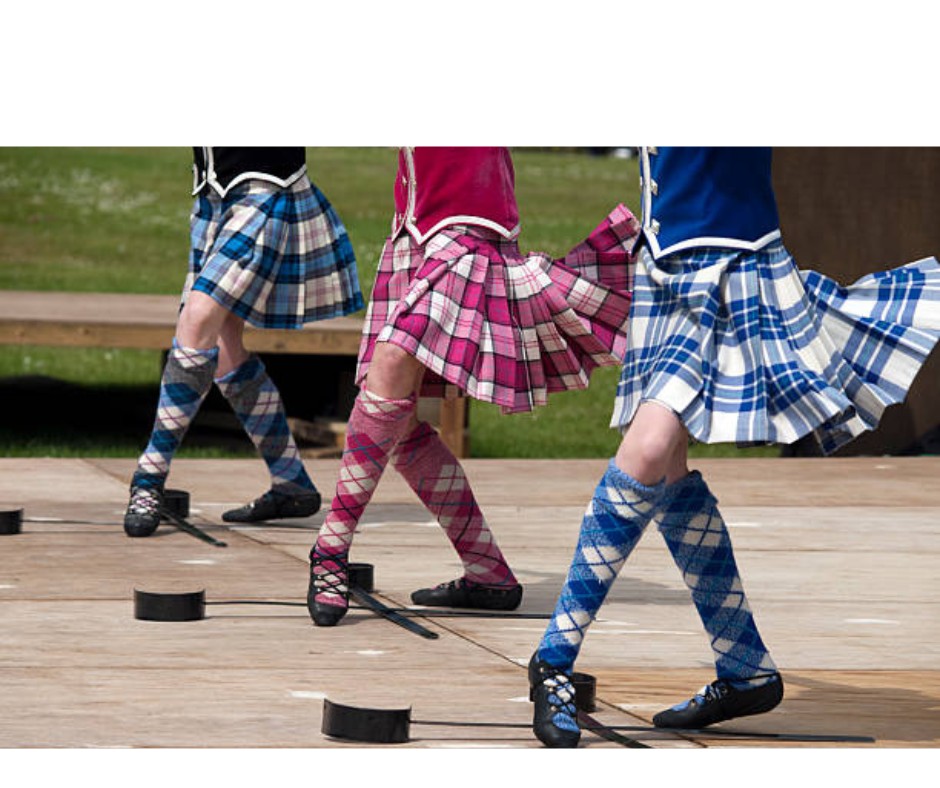
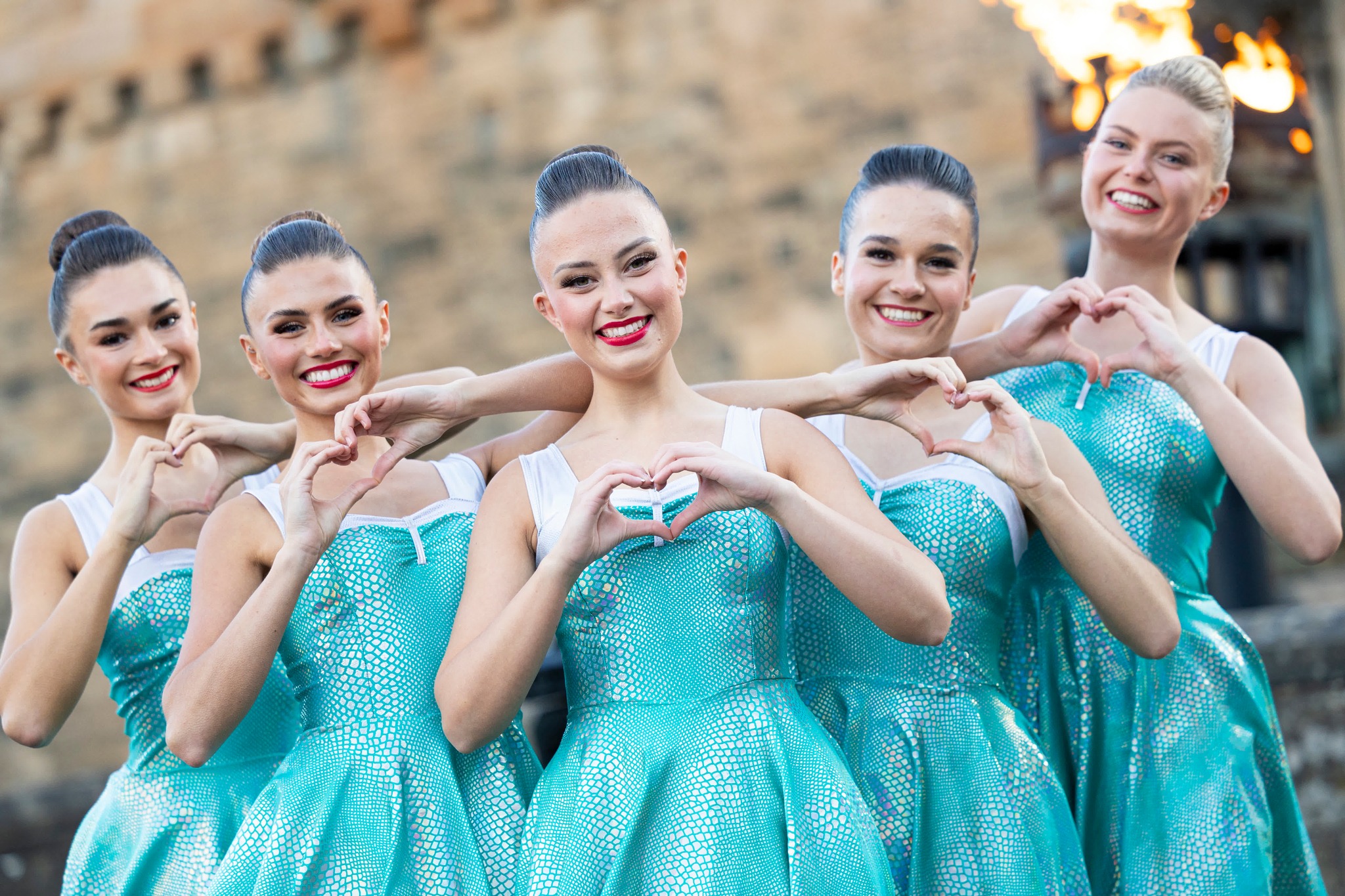
The Tattoo Dancers, led by Dance Director Aileen Robertson, are a particular highlight — a celebration of Highland dancing that shows just how contemporary and athletic the art form can be, while staying rooted in tradition. Places in the group are hard-won: hundreds of dancers from around the world audition each year for a spot on that stage. Beyond the performance itself, the dancers, pipers, and fiddlers who take part are also raising funds for charitable causes with every show.
Our Own Connection to the Tattoo
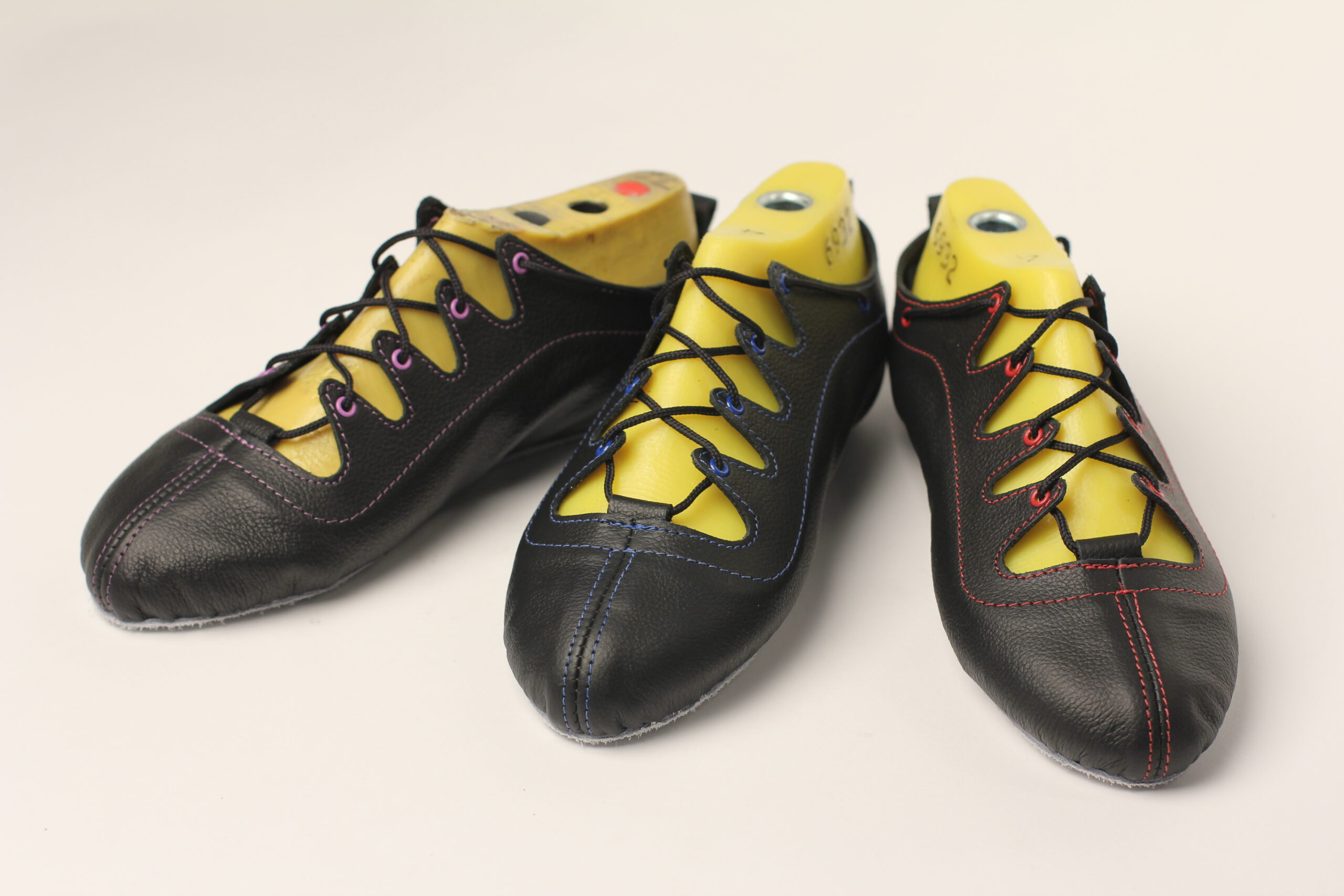
At Thistle Shoes, the Tattoo means more to us than most — because for years now, we’ve been proud to be the official makers of the Highland dancing pumps worn by the Tattoo Dancers, night after night, on that famous Esplanade.
Normally, our dance pumps are made in classic black leather, just as they have been for generations of Highland dancers at competitions and Highland Games the world over. But the Tattoo is a different stage altogether — quite literally. Over the years, we’ve made pumps for the dancers in blue, white, and silver, colours chosen to match the pageantry and spectacle of the performance rather than the more traditional look you’d see elsewhere.
What most people watching from the stands never realise is just how hard those pumps work. The dancers perform daily throughout the three-week festival run, night after night, on the Esplanade’s unforgiving surface of concrete and cobbles — a world away from a sprung dance floor. Between that surface, the sheer number of performances, and the demands of the choreography, a pair of pumps can wear through in a matter of days. It’s a genuine test of both the dancers’ stamina and the shoes themselves — and it’s exactly the kind of hard-wearing performance we build our shoes for.
So next time you’re watching the massed pipes and drums close out a night at the Tattoo, spare a thought for the dancers’ feet. And know that somewhere in Glenrothes, we’re probably already cutting leather for the next pair.