


Why Do Ghillie Brogues Attract So Much Dislike?
Spend any time in Highland dress circles—online or in person—and you’ll notice a curious pattern. The moment ghillie brogues are mentioned, the reaction is often oddly strong. Not mild preference, not quiet indifference, but active dislike. Sometimes even disdain.
This feels disproportionate. And it raises an obvious question:
Why do ghillie brogues provoke such resistance?
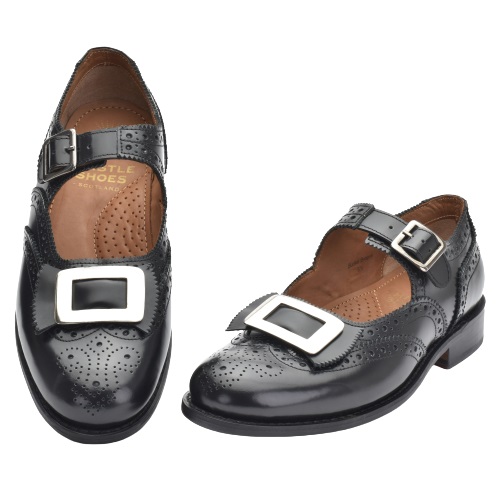
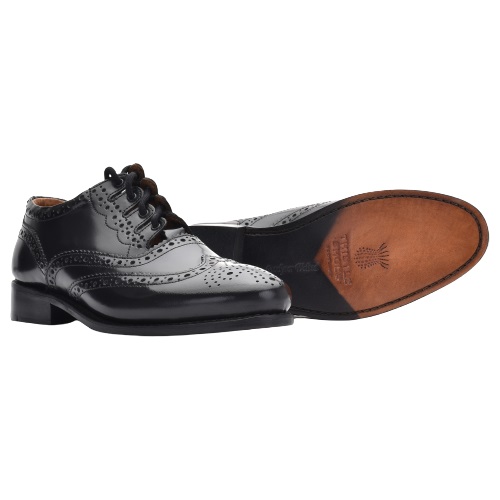
At first glance, the answer seems simple. To modern eyes, ghillies can look unusual. Open-laced. Long ties. No tongue. They are visually distinct from what most people today think of as a “proper shoe.” In an era where footwear norms are dominated by Oxfords, Derbies, loafers, and trainers, ghillie brogues can read as theatrical—or worse, costume-like.
But that explanation only goes so far.

Older Than the Shoes We Treat as “Normal”
One of the strangest things about the dislike is that ghillie brogues are not a modern invention, nor are they some romantic Victorian fantasy. Descriptions of footwear recognizably similar to ghillies appear in accounts from the 16th century on-wards. They long pre-date the Oxford and Derby shoes that are so often recommended for kilt wear today—styles named after English county towns and firmly rooted in later urban fashion.
There are very few shoe styles still worn in the modern world that can make such a claim to continuity.
And yet, ghillies are often dismissed as somehow inauthentic, or “not quite right.”
That alone suggests we are not dealing purely with history or function, but with perception.

“Too Formal”… or Not Formal Enough?
Another common claim is that ghillie brogues are too dressy, suitable only for the most formal Highland occasions. Weddings. Black tie. Full regalia.
But this idea collapses under even light historical scrutiny.
Nineteenth-century visual and written sources tell a different story. The MacIan illustrations of the 1840s and the MacLeay portraits of the 1870s depict gillie-style footwear as everyday wear. Not ceremonial. Not precious. Simply practical shoes worn with kilts as a matter of course.
Written accounts from the same period reinforce this. Ghillies were not special-occasion footwear; they were what you wore.
The notion that they are only formal seems to be a modern reinterpretation—perhaps a by-product of how Highland dress has been preserved, codified, and increasingly ritualized over the past century.
Uncomfortably, Unmistakably Highland
One thing ghillie brogues undeniably are is totally and uniquely Highland.
They were designed for kilt wear. Not adapted to it. Not borrowed from lowland or continental fashion. Designed for it.
And that may be part of the problem.
Most alternative shoes recommended for kilts—Derbies, Oxfords, monk straps, even Chelsea boots—exist comfortably in the world of trousers. They look “normal” because we see them everywhere else. With a kilt, they feel safe, familiar, respectable.
Ghillies do not offer that comfort. They do not blend in. They declare their purpose.
Even closed full brogues, which many consider a more acceptable kilt option, are far more commonly seen with trousers than with kilts. Ghillies, by contrast, have no such ambiguity. They belong where they belong.
That kind of specificity can make people uneasy.

Familiarity, Not Fault
For many people today, their first real exposure to ghillie brogues comes through formal events—weddings, ceremonies, and other occasions where Highland dress is worn infrequently and with a strong sense of occasion. In those settings, ghillies are often encountered as part of a complete, ready-made outfit rather than as an individual choice.
That context matters.
When a shoe is most often seen in highly structured, ceremonial situations, it can begin to feel “fixed” in meaning—associated with formality, rules, and one specific way of wearing Highland dress. Over time, this may unintentionally narrow how people think ghillie brogues should be worn, even though history shows they were once far more flexible and everyday in character.
This isn’t a problem of quality or correctness, but of familiarity. Shoes we see regularly in many different settings—like Derbies or Oxfords—feel adaptable and neutral. Ghillie brogues, by contrast, are encountered in fewer contexts, which can make them seem more specialist than they actually are.
Ironically, this limited modern exposure may work against a shoe that was originally anything but limited in use.

More Variety Than They’re Given Credit For
Another overlooked point is how varied ghillie brogues actually are.
They are not one fixed thing. Modern makers offer versions in black and brown, with leather or man made soles, traditional lacing or buckle closure. Some look rugged and practical; others are sleek and refined.
Early Highland dress guides even note that the long laces—now considered a defining feature—were not mandatory. They could be tied around the instep rather than the ankle, or replaced entirely with shorter, conventional laces.
In other words, even historically, ghillies were adaptable.
Which makes the idea that they are a rigid, narrowly defined “wrong choice” all the more puzzling.

So What’s Really Being Rejected?
When you strip it all back, the dislike of ghillie brogues doesn’t seem to rest on history, practicality, or even aesthetics alone.
It feels cultural.
They may be rejected not because they are incorrect, but because they are too correct in a way that clashes with modern expectations. Too visibly Highland. Too honest about their origins. Too unwilling to masquerade as something else.
So beyond personal taste—which is entirely valid—what explains the hostility?
Have ghillie brogues become victims of fashion folklore?
Have we quietly rewritten the rules and forgotten that we did so?
Or are they simply reminding us that tradition can look unfamiliar when removed from its original context?
I don’t claim to have the definitive answer—but I’m convinced there’s more going on here than “they just look odd.”
And I’d be very interested to hear from anyone who thinks they do have that answer.