
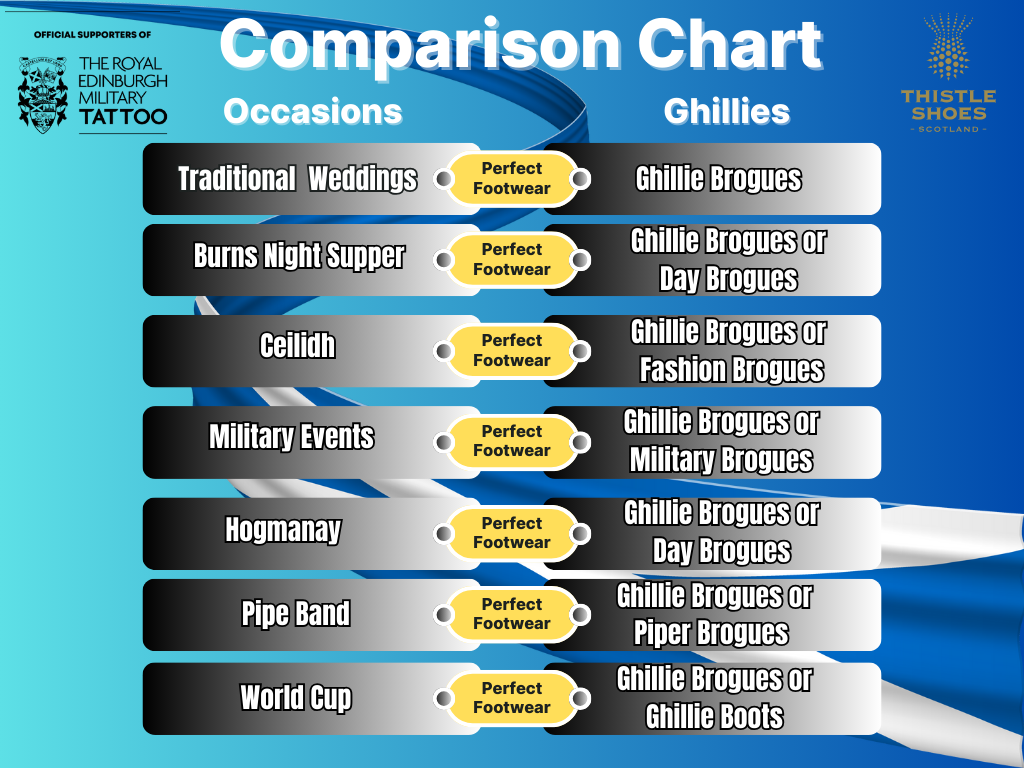
When it comes to completing your Scottish outfit, choosing the right kilt shoes makes all the difference. The appropriateness of your brogues depends on the occasion—whether it’s a wedding, formal event, or casual gathering.
Traditionally, ghillie brogues have been the go-to choice for their authentic Scottish charm. However, today’s fashion offers a variety of options such as standard brogues, day brogues, and semi-formal styles—each designed to match different looks and levels of formality.
Understanding the different types of kilt shoes, how to choose the perfect fit, and maintaining them properly ensures you always step out in style. In this guide, we’ll explore the main styles, fitting tips, and care techniques to help you find the perfect pair for your kilt outfit

Several Footwear Options Fit for a Highlander
Many believe that ghillie brogues are the only proper shoes to wear with a traditional tartan kilt. While it’s true that both tartan kilts and ghillie shoes share a deep historical connection—especially for formal events—the story doesn’t end there.
Modern Highland dress offers more variety than ever. Alongside ghillie brogues, you can also choose from fashion brogues, day brogues, and other contemporary styles designed to match the level of formality for different occasions. Whether you’re attending a wedding, a Highland gathering, or a casual celebration, there’s a perfect pair of kilt shoes to complete your Scottish attire.

– Ghillie Brogues –
When it comes to authentic kilt footwear, nothing represents Scottish heritage better than the ghillie brogues. These classic shoes are traditionally made from high-quality leather and are instantly recognizable by their distinctive open lacing and decorative perforations known as broguing.
One of the most unique features of ghillie brogues is the absence of a tongue. This design dates back centuries and was originally intended to help the shoes dry quickly after walking through wet Highland terrain. Today, the feature remains as a nod to traditional craftsmanship and adds to their elegant, historic appeal.
Perfect for formal occasions, Highland dances, and wedding ceremonies, Ghillie brogues are the ultimate finishing touch to any traditional kilt outfit. Their timeless design ensures every step reflects the spirit of Scotland.

– Day Brogues –
Often referred to as Casual Brogues, Day Brogues are a modern and versatile addition to traditional Scottish footwear. These shoes are designed to suit both formal and semi-formal occasions, making them a great choice for wearers who want flexibility without compromising on style.
You can confidently pair Day Brogues with a full kilt outfit or even tartan trousers for a smart yet relaxed look. In terms of design, they feature a distinctive W-shaped toe cap, decorative perforations (broguing), and a comfortable tongue, offering a stylish blend of tradition and modern comfort.
Perfect for daytime events, ceilidhs, or casual gatherings, Day Brogues let you express your Scottish pride while keeping things practical and elegant.

– Piper Brogues –
Piper Brogues are a modern take on the classic Ghillie brogue, designed for both comfort and performance. Originally favored by pipers and marching bands, these shoes have evolved into a stylish and practical option for anyone who appreciates Scottish tradition.
Crafted with a metal heel cleat for durability and grip, Piper Brogues also feature a full-length cushioned foot-bed, thick premium leather upper, and a padded top-line to ensure lasting comfort during long wear. This thoughtful construction makes them ideal for performances, ceremonies, and formal events alike.
While many assume these shoes are meant only for pipers, that’s simply a myth. Anyone can wear Piper Brogues as part of their Highland dress. They’re a contemporary revival of traditional footwear—blending heritage, comfort, and modern craftsmanship into one exceptional pair.

– Fashion Brogues –
The Fashion Brogues perfectly blend classic elegance with a contemporary edge, making them an essential choice for anyone who wants to step out in style. Crafted with meticulous attention to detail, these brogues are designed not just as shoes, but as a statement of personality and taste.
What sets these brogues apart is the distinctive chiselled toe front, which adds a modern twist to the traditional silhouette. This subtle yet striking detail transforms a timeless design into something fresh and current, effortlessly elevating both formal and smart-casual outfits.

– Ghillie Boot –
The Ghillie Boot is your go-to for rugged durability and timeless style. Built tough with a sturdy leather upper, slip-resistant sole, and reinforced stitching, it’s perfect for outdoor adventures or everyday wear. A padded collar and cushioned insole ensure all-day comfort, while its versatile design pairs effortlessly with jeans or cargo pants. Whether on the trail or in the city, the Ghillie Boot has you covered.
– The Military Brogue –
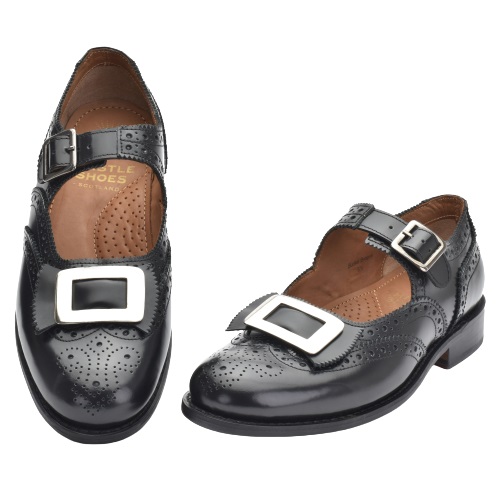
The Military Buckle Brogue is a timeless fusion of style, tradition, and practicality. With its classic perforated design and sturdy buckle fastening, it pairs perfectly with Scottish trews, adding a polished, elegant touch to any outfit. Crafted with a Blake-stitched leather sole, these brogues offer flexibility, comfort, and lasting durability, making them ideal for formal events or ceremonies.

– Brown Ghillie –
The Brown Ghillie blends heritage and style, perfect for tweed and grey tartan kilts. With classic lace-up detailing and a durable leather sole, they offer comfort, flexibility, and timeless elegance. Ideal for weddings or formal occasions, bringing a modern edge to traditional Scottish attire.

– Boys Ghillies –
We know boys are always on the go, so our Boys’ Ghillie Brogues are built to keep up! With extra cushioning in the insole, super-soft leather, and a padded heel cuff that gently shapes to their feet, these shoes are perfect for stylish, all-day comfort during every adventure.

Choosing the Right Kilt Shoes
Now when you know different types of kilt shoes and events where they ideally match with your personality and requirements, here comes the moment to learn how to choose the right pair. To do so, you have to focus on many considerable factors given below:
Match the shoe style to the event’s formality—ghillie brogues for formal, Day Brogue Or Ghillie Boot for semi-formal.
Ensure the shoe color complements your kilt, sporran, and hose for a cohesive look.
Prioritize well-fitted shoes to avoid discomfort during long events or dancing.
Decide between a classic traditional look or a more modern, fashionable interpretation.
Do you know that only choosing the right kilt shoe type is never enough for attractive aesthetics but ensuring the right fit is also the key? That’s why having an awareness of some tips to do is significantly crucial. Some points are given below for your guidance:
Get the accurate measurement of your feet to find the perfect one.
The thickness of the kilt socks also matters, as a result, they can tighten or loosen the shoes. So, do not ignore the hoses.
Don’t underestimate events and choose the best quality if you have to wear your shoes all day.
People are seen not properly caring for their kilt shoes, which is not a good idea at all. Caring and maintaining them is not only important but obligatory. All the kilt shoes discussed above are made with leather, which is a well-known material for comfort and longevity. However, a bit of carelessness can convert comfort into discomfort. Some caring tips are given below for your assistance.
Leather Care: Leather shoes also need proper care like other shoes to stay longer. However, the ways of looking after them are different from other materials. They need to be properly cleaned, conditioned, and polished regularly.
Proper Storage: When it comes to storing your kilt shoes made of leather, find a breathing space where sunlight may not reach it.
Regular Inspection: No matter what shoe type you have. Kilt shoes or sneakers, regular inspection is the key to their longevity. Check their construction, finishing edges, and natural texture. If you notice any problem, seek help from experts instead of repairing yourself.
Frequently Asked Questions
Can I wear kilt shoes with trousers or jeans?
Ghillie Brogues and tartan kilts are traditionally associated with each other for formal events. So, you can wear other kilt shoes like dress shoes or casual shoes with jeans pants. When looking for the suitability of kilt shoes with tartan trousers, they are a choice and offer an exceptional look!
Do I need to Be Scottish to wear Ghillie Brogues ?
Not at all! You don’t need to be Scottish to wear ghillie brogues. While they are a traditional part of Scottish Highland dress and often paired with kilts, ghillie brogues are essentially a stylish, heritage-inspired shoe. Anyone who appreciates classic craftsmanship, elegant detailing, and a nod to tradition can wear them—whether for formal occasions, cultural events, or simply as a statement piece with tweed, tartan, or other smart attire.
Do I have to wear a Kilt with Ghillies Brogues ?
No, you don’t have to wear a kilt with ghillie brogues. While they are traditionally paired with kilts for formal Highland dress or ceremonial occasions, ghillie brogues are versatile enough to complement other outfits. They can be styled with tweed trousers, smart casual wear, or even dress pants, adding a classic, heritage-inspired touch without requiring a full kilt ensemble.
Are ghillie brogues comfortable?
Yes, ghillie brogues are generally comfortable, especially once properly broken in. Their flexible leather soles and open-lacing design allow the shoes to mold to your feet, providing support and ease of movement. With the right fit, they’re suitable for everything from formal events to dancing, walking, or extended wear.
Are they suitable for dancing?
Yes! Ghillie brogues were originally designed for Highland dancing, so they’re well-suited for it. Their flexible leather soles and open-lacing design provide grip, freedom of movement, and comfort, making them ideal for traditional dance steps as well as other ceremonial or formal occasions.